Thank you, Bernie.
Thank you for sharing your journey with such honesty and humility.
Your story is a powerful reminder that lasting change doesn’t come from perfection—it comes from consistently choosing to be just a little better than yesterday.
We’re incredibly grateful to have you as part of the Coastal CrossFit community and hope your story inspires others to take that first step towards better health.
Sometimes, one person’s story is all it takes to change another person’s life.
Better Than Yesterday: My CrossFit Journey
By Dr Bernard Tamba-Lebbie
In 2023, I reached a point where I knew something had to change.
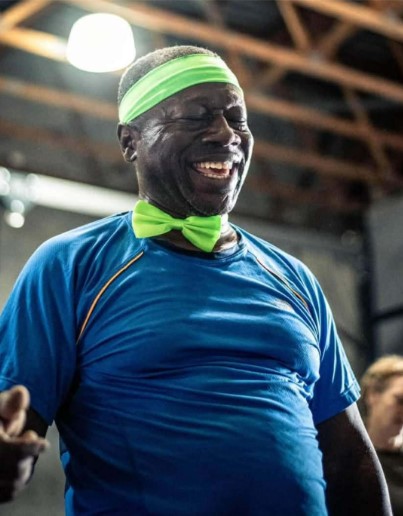
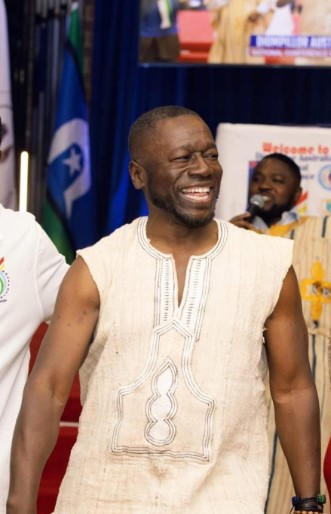
I weighed 120 kilograms. Around the same time, two of my fellow surgeons underwent coronary artery bypass surgery because of severe heart disease. Then, after returning from Sierra Leone, where I had celebrated the 75th anniversary of my high school, one of my closest friends—a mining company CEO with whom I had spent much of the reunion—collapsed at a roundabout in Freetown and died suddenly from a heart attack.
Those events became a crossroads in my life. I had a choice: continue down the path I was on, or change direction before it was too late.
Ironically, my first solution wasn’t exercise. As a surgeon, I looked for a surgical solution. I spoke to one of my colleagues who performs bariatric surgery and asked whether he would perform a gastric sleeve operation on me. He smiled and said he would happily do it, provided I obtained a referral from my GP.
When I asked my GP for that referral, I fully expected him simply to write it.
Instead, he refused.
He told me he would only refer me if I first committed to six months at his gym and genuinely failed. Looking back, that refusal may have been one of the greatest gifts anyone has ever given me. My journey wasn’t completely straightforward.
There came a time when I felt I wasn’t making the progress I had hoped for. I went back to my GP and asked whether medication might help. He agreed, and I started one of the newer weight-loss medications. Unfortunately, it simply wasn’t for me. I struggled with significant nausea and found the side effects difficult to tolerate. After giving it a genuine try, I decided to stop taking it. Rather than continuing to search for another shortcut, I went back to what I knew I could control—turning up at the gym, listening to my coach, and continuing to improve my eating habits one meal at a time.
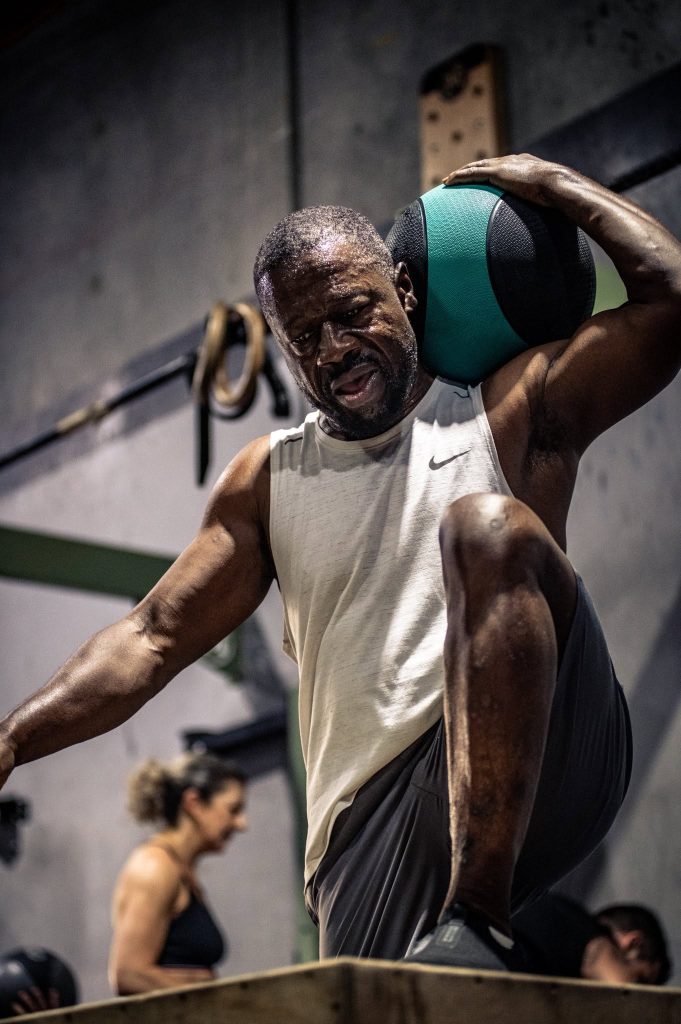
That decision became another turning point. For the first time in my life, I heard about CrossFit.
When I told people at the hospital that I had joined CrossFit, most thought I was crazy. Some laughed. Others simply couldn’t imagine that someone weighing 120 kilograms would survive a CrossFit class. Then I met my coach, Marie Saliba. On the very first day, I told her that I had only one goal.
I wasn’t there to be better than anyone else. I simply wanted to be better than my yesterday.
That philosophy has guided me ever since. My journey certainly hasn’t been perfect.
One of my biggest failures came when I ignored Marie’s advice. I tried to progress too quickly and attempted to jump from one pull-up bar to another before I was ready. I dislocated both shoulders and eventually required surgery on both of them. It was a painful lesson in patience, humility and listening to someone with more experience than me.
But despite that setback, I never stopped.
When I first arrived at CrossFit, Marie would often ask me to run only 50 metres because that was all I could comfortably manage. Today I regularly run 400 meters. I still don’t particularly enjoy running, and plenty of people run past me, but that doesn’t matter. I’m not competing with them. I’m competing with the man who walked through the CrossFit doors three years ago.
The biggest transformation has probably been my relationship with food. Initially, I simply adopted intermittent fasting, eating only between midday and 9 p.m. I still follow that routine most days. Over time, my eating habits evolved naturally. I became much more intentional about the food I brought into my home. For many months, around 80% of my meals were seafood. Most weekends I would drive to Mooloolaba, buy fresh seafood straight from the trawlers, meal-prep it for the week and keep it in the fridge.
Coming from Sierra Leone, rice was deeply embedded in my culture. In fact, if you ask someone back home whether they’ve eaten and they’ve only had bread or potatoes, they’ll often answer, “No.” What they really mean is they haven’t eaten rice. For most of my life, white rice was central to every meal. Today, I’ve largely replaced it with quinoa and, more recently, brown rice.
I also became much more conscious about eating foods in their natural form. I steam vegetables instead of frying them, buy fresh fruit from the local farmers’ markets, and carefully read ingredient labels so that my soy sauce and fish sauce contain no preservatives. When I season food, I tend to use simple ingredients like black pepper, white pepper and Himalayan salt rather than highly processed seasoning mixes.
There is no sugar in my house. If visitors ask for sugar in their tea or coffee, they’re usually disappointed because I simply don’t have any. Instead, I offer them honey. I actually have several different varieties, much of it generously supplied by one of my closest friends on the Sunshine Coast, Paul Secho, who has his own honey farm. It’s one of those little pleasures that reminds me how wonderful natural food can be. You’ll also never find soft drinks like Coke, Sprite or Fanta in my refrigerator. The only bread I normally keep is dark rye bread. I know it’s an acquired taste and not everyone enjoys it, so I also keep spelt bread for friends who visit.
Over the years I’ve realised that what I keep in my house determines what I eat. If unhealthy food isn’t there, I simply don’t eat it. I do have one indulgence. Occasionally you’ll find bottles of pure fruit juice in my refrigerator, usually imported from New Zealand and made entirely from fruits such as kiwifruit, nectarines and blueberries. From a calorie point of view, they’re probably not much better than many soft drinks, and I’m aware of that. The difference is that they’re made from real fruit without preservatives. I might enjoy a glass once a week, although more often they’re there for friends who visit.
More recently, I discovered another weakness. Like many people, I went through what I jokingly call a midlife crisis. Instead of buying a sports car, I bought a dry-ageing fridge. I filled it with beautifully marbled Wagyu beef, and it was absolutely delicious. Unfortunately, it was also absolutely effective at helping me gain five kilograms. My weight climbed from around 82 kilograms back to 87 kilograms. It frightened me. But this time was different. Instead of giving up, I simply went back to the habits that had helped me lose the weight in the first place. That’s probably the biggest lesson I’ve learned. Healthy living isn’t about being perfect. It’s about recognising when you’ve drifted and having the courage to return to the path you know works.
I also enjoy the occasional Dry July because alcohol contributes far more calories than most of us realise. I rarely drink during the week, but like many Australians, weekends can be another story. I’ve learned that even those weekend calories add up surprisingly quickly.
Over the past three years, I have gone from 120 kilograms to about 85 kilograms. My next goal is to break through the 80-kilogram barrier. Whether I get there this year or next doesn’t really matter. What matters is that I keep moving in the right direction. CrossFit didn’t simply help me lose weight. It gave me something far more valuable. It gave me a habit. A habit of turning up. A habit of making small improvements. A habit of choosing tomorrow’s health over today’s convenience. Every time I walk into the gym, I remind myself of the promise I made to Marie on my very first day. I’m not trying to be better than anyone else. I’m simply trying to be better than my yesterday.
I’ve learned that health isn’t built by one big decision. It’s built by thousands of small decisions, repeated over and over again. Sometimes we make the wrong one. The important thing isn’t that we never stumble; it’s that we keep choosing the next right step.
If my story encourages just one person to take that first step—to walk into a gym, go for a walk, make one healthier food choice, or simply believe that change is possible—then sharing it will have been worthwhile. After all, the hardest step isn’t the second one. It’s the first.